Why displaced people need a digital identitiy
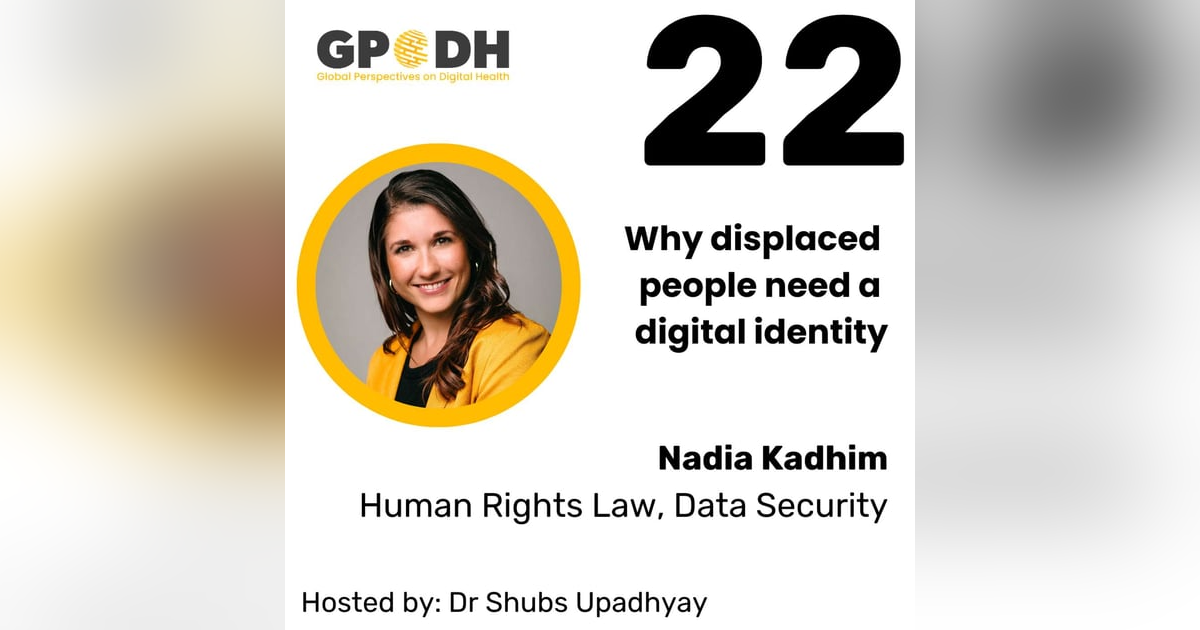


I sat down to talk to Nadia Kadhim, co-founder of Naq about digital identity and healthcare for displaced people.
Nadia’s father was a refugee, and we hear about her journey into human rights law and eventually into data security and compliance.
We cover:
- That digital identity for displaced people is messed up.
- How this creates very real barriers to care (with examples)
- How healthcare systems aren’t set up for real access or meaningful care for refugees
- Can we even do anything about this when political agenda in many places cares less and less about this?
- Why, even so, we should wake up - the likelihood of us being displaced due to conflict or climate change is going up. How would we want to be cared for?
- This is an everybody problem, which is part of why it’s so hard to solve.
If you’re into policy, data security, health and digital for displaced people, or building tools that could be being used by refugees, you’ll gain a lot from spending less than an hour on this topic.
If you care about this topic you should also listen to the episode with Aral Surmeli. Inspiring in equal measure.
Chapters
00:00 Introduction to Digital Health and Human Rights
07:19 Data, Identity, and Access to Healthcare
10:39 Challenges Faced by Refugees in Healthcare
15:21 Real-Life Stories of Refugees and Healthcare Access
20:32 Why no solution yet?
23:01 The Future of Healthcare for Displaced People
30:29 The Role of Funding and Multi-Stakeholder Approaches
31:59 Data and Human Lives: The Health Data Poverty Problem
34:22 Ethics and Regulatory Compliance in Digital Health
38:22 Ownership and Security of Health Data
43:13 Nadia's Recommendations for Policy Makers and Digital Health Founders
----
Global Perspectives on digital health shares the insights of innovators, donors, policy makers and researchers on what it takes to create impact at the last mile with digital health and AI in underserved communities around the world through audio and video.
We’re telling the underreported stories of impact that the digital health industry needs to pay more attention to.
There’s a growing back catalogue of over 20 engaging, inspiring and real conversations about the places in the world where the biggest challenges lie, but where the deepest impact in healthcare is happening. Tune in on gpodh.org
Subscribing and sharing really helps get this to the noggins of people who care about this topic. If you found this useful, please leave us a comment and some review stars.
Nadia Kadhim (00:00)
How do we ensure that these people can access that data and just they can access that data and just the people that they want to share it with can access that data at the time that they need it, at the place that they need it. I think we need to stop thinking about records about people and about refugees to records owned by refugees and displaced people themselves.
Shubhanan Upadhyay (00:11)
Yep.
Shubhanan Upadhyay (00:24)
There are 43 million people displaced through conflict, environmental disaster. Refugees, through no choice of their own.
The likelihood for this is going up. The likelihood for you being directly affected by this is going up. And yet our health systems are not really set up to deal with people who have come from a different place accessing healthcare.
We've talked often about the inverse care law. The people who need healthcare the most are least likely to receive it. And this massively affects displaced people.
Imagine you've had to leave at very short notice your home with your family You've come to a new place. You've barely scraped together some documents. People don't speak your language.
There's so many things for you to have to deal with documentation that you need, trying to find a way to sustain yourself and your family. Of course, acute healthcare needs, maybe someone's hurt or injured or sick or has some kind of trauma,
How do you take your record? how do you tell people what chronic conditions you have when you don't know the language? Maybe you have things stored on a health record in your country, but there's no way for anyone to access that in the clinic where you're maybe trying to get your insulin or chronic medication where if you don't get that...
you will end up in a really bad situation. And so I'm really, really pleased to be able to speak to Nadia Kadhim of Naq who work with health systems on compliance and data and risk and interoperability,
hearing her story about how she got into this topic and how it affects displaced people. And what needs to happen from a data and compliance lens for displaced people to
benefit from the huge potential we have with algorithmic decision making, A fundamental pillar to that is whether people have a digital identity and that's what we're going to be getting into.
If you're building in this space, if you're building policy for this space, if you're researching cybersecurity and compliance, particularly from a cross-border lens, data security, an ethics lens, then this is worth
you listening.
Shubhanan Upadhyay (02:39)
Nadia Kadhim thank you so much for joining us on the Global Perspectives on Digital Health Podcast. Welcome.
Nadia Kadhim (02:47)
Thank you, Shubs. I'm very, very excited to be here.
Shubhanan Upadhyay (02:50)
Nadia, why don't we start with you telling us a little bit about yourself, your story, it's so interesting, and about the work that you are doing.
Nadia Kadhim (02:58)
Gladly. Well firstly, Nadia Khadim, co-founder of Naq My story really began actually before Naq at Human Rights. I am Dutch, grew up in the Netherlands
So my early career started after I did my law degree at Leider University and a master's in international humanitarian law. And during my master's
I actually specialized in child rights and the legal aspects of child abuse. So I could see very early on that I really just wanted to help people and I wanted to help the most vulnerable people in society. And for me, this was very, very linked to human rights protection. whilst I was doing my masters, I got into child rights, and I started volunteering for different organizations.
that were preventing child abuse and that were working closely with government policy, as well as on the ground, social care, schools, education, all in signaling child abuse, multi-stakeholder collaboration and data sharing. And whilst I was working with these kind of organizations and I was sharing my own story, I started weaving in sort of those legal aspects of
child abuse and of course of privacy as a necessary part of this. So after my masters, I was asked by one of these organizations that I'd worked with as a volunteer and as a freelancer to actually join them. And because I had just finished my masters in law, they also said, look, you have this background in child protection and you clearly know a lot about sort of the legal aspects of child abuse, the child rights.
Shubhanan Upadhyay (04:11)
Yeah.
Nadia Kadhim (04:35)
but you're also now legally trained, could you please also become a privacy officer? So this was really my first introduction to privacy. And I did that for three years with a lot of passion. And the problems that I saw during this time with tech and privacy compliance, cyber security.
really led me to when I my co-founder Chris to start Naq
Shubhanan Upadhyay (05:04)
Can you give us an idea of the work that Naq is doing in this space?
Nadia Kadhim (05:07)
Absolutely.
Yeah. So when we started Naq in 2020, it was really the idea to start this cybersecurity platform that would automate cybersecurity and privacy compliance for SMEs.
And once we had found that some of our customers were in digital health and in the medical space, that's really when we found our sweet spot of what we do today, which is automated compliance for healthcare, both digital health, ⁓ med tech.
so the organizations that supply into hospitals, into health systems, but also the health systems themselves. So we really provide this all-in-one automated platform that takes away the pain of compliance because compliance for a health company, for a medical company, is one of the cornerstones of safety and their growth.
both commercially as well as from a governance perspective. But it's incredibly difficult to grow and iterate because every single time that you make a change to your product, for instance, you need to update your governance and your compliance. And every time that you want to go into a new market, you have to think about the local governance and compliance standards in that country, in that area.
Shubhanan Upadhyay (06:27)
Absolutely. And I think that's a really nice segue, at least for me, having worked in a digital health company on compliance and what that means locally in the local context and what that means for decisions you need to make, how you record them, how they're auditable, et cetera, the unique risks of different contexts.
Some people might think, okay, that's really interesting and I can see how that's part of a globally focused digital health podcast. But the other angle to this episode is talking about displaced people. And people might be, well, what is the link between displaced people and compliance and security and risk? Some people might see it very clearly, some people not so much. So I wanted to explore this problem space with you.
going into your experience and how this led to your work with displaced people. And then maybe we could go into how does this relate to compliance?
Nadia Kadhim (07:21)
Yes, indeed. The link might not immediately be clear. Well, obviously, as know, co-founder of a technical solution that focuses on compliance, it might be useful to sort of also know how from a personal perspective how I got there. My mum is...
half Dutch, half Surinamese, but my father is actually an Iraqi refugee. And I think that my drive in life to help other people, to help the most vulnerable people, were sort of informed by my early experiences in life, which led me down this path of child protection and prevention of child abuse, but also why conversations, documentaries, films,
about refugees and displaced people spoke to me so much because when my father came to the Netherlands in the early 90s, he had obviously suffered a lot of trauma. His travel over to the Netherlands was to say the least also traumatic, like for millions and millions of people around the world who would recognize that. And so
My personal interest in helping people, human rights and refugees really come from a personal passion. And my work with Naq today and my work today is really grounded in data. Everything I do when you talk about compliance is about data, because what we want to do is protect data. We want to make sure that it's private, it's secure.
⁓ Even when we talk about medical compliance, a lot of the medical compliance requirements for med techs, for digital health companies are really around information. And I believe that data is power. And so, you know, we put data at the heart of what we do and data is at the heart of healthcare. Data can enable innovation. It can enable adoption.
but a lack of data can actually block innovation, block adoption, but I think more importantly, it can also block certain human rights. We talk about the right to access to healthcare. This is a crucial part of the international convention on economic and social rights on the UN human rights convention. It's enshrined in many national laws. But if we think about it, this right to
access healthcare is massively massively impacted if not blocked if we have no data and I think the reality for a lot of migrants displaced people refugees asylum seekers is that they come from countries and areas where data is not so much at the heart of
the economy, the government and healthcare, or it is, but it's become collateral damage in either ⁓ conflict situations or or climate and environmentally impacted events. So when we don't have this data,
Shubhanan Upadhyay (10:21)
Yeah. Yeah.
Nadia Kadhim (10:27)
the human rights of very vulnerable people are massively impacted. And so for me, that's a really important problem that we need to talk about.
Shubhanan Upadhyay (10:39)
Yeah, and just to kind of draw corollary on this, you and I are in the kind of currently in the EU context, right? The EU is kind of one kind of federated jurisdiction, but equally has its own nuance, right? I live in France, you live in the Netherlands.
If I wanted to come and visit you in the Netherlands, and I've got a chronic disease, I fall ill. It's hard enough for me in all the privilege that I have. I have a digital identity here. I have maybe a health record that has the key medications that I'm on, the allergies that I have, all of these things that will drive important key decisions that...
If I'm not able to communicate that I might have access to healthcare or an emergency department, but to get that source of truth reflected so that a healthcare practitioner in the Netherlands can make an equal level of decision-making to my own doctor, it's clearly not gonna be the same, right? And we sometimes kind of accept that, okay, when I go on holiday or go on a work trip,
I have the time to prepare for taking a record with me somehow. And there are some already some well structured data sharing agreements where it might even end up being possible. However, in what you've described, that's just not there. So A, the baseline is there's no, probably unlikely to be any kind of record or digital identity. And then you're going somewhere that has a digital infrastructure.
Nadia Kadhim (11:50)
Yeah.
Shubhanan Upadhyay (12:07)
and you're just not present in it. the level of healthcare service that you're gonna have access to will be affected negatively. And in our amazing hyped up future that we have of like predictive algorithms, et cetera, this is also a key piece that is gonna be missing, right? And so the takeaway of that, it's already hard enough
in a situation of good digital infrastructure for people to receive the type of care that they get home or that they used to. And then like times that by 10 in terms of like not goodness, right? For people who are displaced and coming from and particularly vulnerable.
Nadia Kadhim (12:35)
Yeah.
Yes, exactly.
Yeah, 100%. And I think you touched upon something very interesting there. It's, think, at the heart of this problem, when I talked about access to healthcare and the right to healthcare, and we talked about data. But it's very, very difficult to have all of these rights attached to data, to have even the right to healthcare, when there is no legal identity to attach it to.
And so this is where the conversation about identity really becomes
so critical. You know, we're talking about statelessness. If we're talking about a lack of identity, and we're not talking about a small group of people, we're talking about millions of people worldwide who are stateless. the stats are that
displacement is only increasing, especially when we not only take conflict situations, but also climate crisis into account. Some estimates talk about 250 million people who have been displaced over the last 10 years. And if you think about the climate crisis, you can imagine that this will only increase over the next 10 years. And this is a really scary stat because, you know, all of the very necessary innovation in healthcare.
is focused on the people like you and I who can go on holiday, who when they need healthcare can go to that French or Dutch or German or Greek hospital. You know, even if they don't have their digital patient file ready, they have the means to communicate. They have the cultural understanding, vice versa, to actually sort of communicate with the hospital staff, with the nursing staff, with the patients.
to try and get to a level of understanding. imagine when, you know, this is not just a problem of a lack of data, a lack of resources of money, but a massive language barrier, plus a cultural barrier in even being allowed to talk about certain things. And so I think we're in a very privileged position from France and the Netherlands and our EU and US and UN offices to talk about this, but it's also very, very necessary.
Shubhanan Upadhyay (14:46)
Yeah.
Yep.
Nadia Kadhim (14:52)
because of these complications.
Shubhanan Upadhyay (14:55)
100 % the episode I did a few episodes back with Aral Surmeli who's the founder of Hera Digital. They built a digital tool to help Syrian refugees in Turkey. And that was building with that community. the developers were, you know, refugees themselves. And he was talking about the importance of making sure, when you're in that situation,
your general preventative actions that you take in your healthcare just become like right at the bottom of your list of priorities, right? You've got so many things to juggle is my documentation okay? you know, Maslow's hierarchy of needs like shelter, do I even have shelter? Do I have food, et cetera? And suddenly yet you're not thinking long-term and preventatively if you were even in a privileged position to be able to do that before.
Nadia Kadhim (15:34)
Do I have food?
Shubhanan Upadhyay (15:44)
And so of course there's downstream consequences of that, vaccinations not being had, et cetera. And so that's what they had been building in terms of a way that was A, culturally appropriate and B, to then help that, okay, there were healthcare services for them, but for them to be plugged in in the right way, this helped. But even those types of tools that people are developing depends on the types of things that you're talking about. So this is like a key infrastructure pillar.
Nadia Kadhim (16:09)
Exactly. Infrastructure.
Shubhanan Upadhyay (16:12)
And so
I'm curious do you have any stories on like how this manifests for people?
Nadia Kadhim (16:18)
Definitely two examples spring to mind. One of a friend of mine who fled a conflict situation after nine months of imprisonment. And you know, their first experience in coming to Europe was being ⁓ illegal.
being on the run, being threatened not only by their own suppressive government, of course, the one that they fled, but then having to deal with other countries that also might not have wanted them in there, even in transit. So it's a very, very scary, scary situation after somebody is already traumatized. And, you know, they came to the Netherlands after a ⁓ long time of sort of
back roads and a lot of walking to come to the Netherlands. And they are of course then sent to a refugee camp. And in this refugee camp, know, your first priority as you discuss is sort of that pyramid, right? We think about shelter, okay, we've got shelter, we've got food. But now...
suddenly there's space to actually think about what's happened to me and am I healthy? And I think what really stood out to me there is sort of first, the fact that healthcare was not a main priority for them at the time, but it became a priority later. But the sort of cultural and language barriers in receiving that healthcare, even the waiting time within the refugee camp.
to receive that care, but also the fact that it was only very, very superficial care, just only emergency care. And one of the blockers there was that they had lost their passport, their passport had been taken. So they had no way of even using the healthcare provisions in the Netherlands in local hospitals.
Shubhanan Upadhyay (17:58)
Yep.
Nadia Kadhim (18:12)
And so this is, this is one where I've really seen the lack of identity being a real blocker in access to healthcare. And then another example is, I spoke to a group of, of healthcare professionals. this was last summer or in June. And, you know, I was discussing similar issues as I'm discussing today, you know, data at the heart of everything we do. but
data and the lack thereof and the lack of digital identity to attach it to really, really can have very far reaching consequences. And one woman in the audience came up to me afterwards and she was a refugee from Ukraine. where actually normally we wouldn't say that healthcare provisions are necessarily an issue. But of course, in this context, they have become very much of an issue.
She was not fleeing alone. So she was traveling with her two daughters and one of her daughters had chronic illness. And when I spoke about the need for a digital identity, which was in the hands of the people that we're talking about, connected to an electronic patient record,
that cannot be lost, cannot be destroyed, cannot be misused by an oppressive government. You she came up to me and she said, this is exactly what I would have needed. My daughter had a chronic illness. I did not have the language. I was too traumatized to even start explaining what had happened to my daughter. couldn't remember everything.
vaccinations, allergies, you know, it goes from seemingly very simple issues to the larger conversations that need to be had in such a situation, to the point where she was just very emotional. And I really appreciate her sharing her story with me, but unfortunately she is not alone in that story, where just the very infrastructure, the foundations of healthcare, things like
data and identity, I know I keep hammering on, but we can think about all of these great innovations for the 90%, but we're lacking very real, just basic infrastructure for that percentage of people that need it the most.
Shubhanan Upadhyay (20:26)
Those are two such telling examples. I think, I think that the kind of event that you're referring to is this, and this is where we met first was at HLTH in Amsterdam, back in June. It was so refreshing to have this type of conversation at that kind of event. That kind of event where it's amazing to see all the innovation that's happening in Europe.
Nadia Kadhim (20:34)
Yeah. Yeah.
Shubhanan Upadhyay (20:49)
you know, lots of amazing stuff coming from the U S et cetera. but we have to remember that there's, are these really, really key fundamentals that we need to address.
before we can even pretend to be successful, right? Or say that we're successful, right? Part of it is like, how do I tell my story and have a source of truth of my past, in particular from a medical perspective? How do I also have a source of truth of what's going on right now? And the chronic illness thing is so hard as well because, you know, you might, this person might have been on one type of medication.
Nadia Kadhim (21:06)
Yeah,
Shubhanan Upadhyay (21:25)
or one formulation of a chronic medication. There's so many different forms of different types of medicines, right? And different countries have their own guidelines as well. And maybe that formulation might not be available. And so therefore that critical decision needs to be made, informed decisions by healthcare workers on, okay, so what do we have to then switch over to? if we switch over to this one, it might need a different type of monitoring of like your kidneys or something like that, right? And so...
Nadia Kadhim (21:34)
Thanks.
Thank you.
Shubhanan Upadhyay (21:51)
That all becomes like really, really important to be able to record and have as a good source of truth. And to me, this leads to a conversation on like now we've kind of explored the kind of problem area. What does good look like here?
Nadia Kadhim (21:56)
Exactly.
Shubhanan Upadhyay (22:04)
What needs to happen from a baseline legal identity perspective so that then when people, go to an emergency department or get some basic level of primary care, then the actual quality of their care is better informed by a good source of truth.
Nadia Kadhim (22:20)
I mean, talking about the solution, I think this is one of the reasons why this topic has not been discussed that often yet. It's because it's such a fundamental problem that cuts at the intersection of law, policy,
politics, healthcare, innovation. And so it's not a simple problem to solve. And I would be the first one to put my hand up and say like, look, it's not as easy as just creating a digital identity, as just creating an electronic patient record, because if that was the case, it would have already been done. One of the issues with that is recognition.
in the same way that, you know, countries need to recognise certain territories as countries in order for that country to be treated as a country. A person needs to have a recognised legal identity in order to attach rights to that identity. And all of these human rights treaties and UN, EU and national rights, they can only be
recognised, I suppose, enforced if there is a legal identity to attach it to. But what is recognised in one country or even in one province, in one city, in one hospital, in one field, emergency care tent is different throughout the world.
Shubhanan Upadhyay (23:45)
Mm-hmm.
Nadia Kadhim (23:48)
And so there is such a real need for collaboration between all of these stakeholders that I just mentioned. There will be a need for a change in law to recognize different forms of identification that we really need to come together. And I think private industry can play a big role in this in terms of the actual tech.
thinking about funding, know, one of the big challenges here is who pays. This is often where the conversation stops. You know, we can all agree that these fundamental inherent human rights are very important, that the access to healthcare, especially for vulnerable people, is very important. But when you sort of present them with a potential solution, the question is often who pays.
And then the conversation just stops and it's not, it's who pays for the development. And I think that there could be solutions for that. I think there are very many grants, both national European, international, as well as charitable foundations, NGOs, VCs that are trying to do the right thing as well. And they can definitely help fund building solutions like this. But then the question is, but how do we make a business case out of this? And I think that
Shubhanan Upadhyay (24:39)
you
Nadia Kadhim (25:05)
though from a human rights perspective that angers me because I'm like, well, the human dignity in this is actually more important as a tech founder with a lot of backing from VCs, I do understand like where's the business case. So I think that is also a problem that needs to be solved.
And when we think about the ROI, you know, I often say a refugee's health shouldn't live or die by VC timeline, a VC return timeline. This immediate ROI logic can't really be applied to an issue that cuts at the intersection of healthcare and law and politics and ethics.
and basic human rights. So I think we really need to think about the measuring those returns in other forms than monetary. It can be the prevention of public outbreak, which of course has massive, massive impacts on stability, public health, but also just human dignity. If we can't provide that basic infrastructure,
with the tools at our disposal for people that need it the most, then I think that our ROI and our budgets need some change.
Shubhanan Upadhyay (26:18)
And our definitions of value, right? And I think that's what you've alluded to. And I often have this conversation with people on this podcast on like, you know, we, it's really, really important for interventions. And you can think about all of this work as some kind of intervention to be cost effective, but measuring the value of it depends on the use case and the context and what we value as a society. And so, yeah, financial returns might be important, but there's
Nadia Kadhim (26:40)
Thanks.
Shubhanan Upadhyay (26:44)
absolutely other definitions of value here I've heard other people, think even in the panel that you were on HLTH one of the other panelists talked about this as governments thinking about this as a health infrastructure investment. You alluded to this earlier. The likelihood of
Nadia Kadhim (26:56)
Yes.
Shubhanan Upadhyay (27:04)
people listening to this or watching this being displaced in the next 10 to 20 years is going to go up. Our health systems, even in just in terms like the human delivery of healthcare is not set up to deal with displaced people, nor is the digital infrastructure behind that.
Nadia Kadhim (27:10)
Yes.
Shubhanan Upadhyay (27:24)
why should we invest in something like this? because we could, it could all happen to us, right? And how would we want to be treated if we would, my mom was a refugee from Uganda in the 1970s. And you know, at the time the political rhetoric was different.
Nadia Kadhim (27:31)
Probably one.
Shubhanan Upadhyay (27:42)
where it was relatively being received in the UK was, I think there were different challenges and things at the time, and tough experience like your father would have had. And now with the likelihood of this is going up, of people being displaced, there is a lot more
Nadia Kadhim (27:50)
Yeah.
Shubhanan Upadhyay (27:58)
Hey, we need to protect our citizens first. There's a lot more protectionism and thinking about us first, fill your own cup before you can help anyone else.
Nadia Kadhim (28:06)
Yeah.
Shubhanan Upadhyay (28:07)
I read somewhere once, if you think about accessibility from a technical and design perspective, it was more to do with service design. if you think really, thoughtfully and well about vulnerable people as you're designing your tool, a byproduct of that is that everyone benefits from that actually,
And so investing in this feels like, helping underserved populations in our own societies as well.
Nadia Kadhim (28:32)
Absolutely, absolutely. I think over the last few years, what we've seen is really, you mentioned it before, I'm seeing all of these AI innovations in healthcare, right? And when we walk around our conferences and we see the conference floor and we see all the innovations that come out, they're really focused on a couple of things really. We've all seen the scribes and the ambient listening.
And luckily there are innovations coming out for more vulnerable groups, whether that is displaced people, refugees, women, ⁓ women's health, et cetera. But like we talked about, we really need to think about an investment in the underlying infrastructure. We can't build a building if we don't put down the foundations first. And I think the frustrating thing is that we were getting somewhere, but then funding is being
and that sort of decision of funding or even the philanthropic decision of a single person or a single foundation or NGO can really impact somebody's life. You know, if the funding is pulled, that halts progress to a point that we just keep chasing.
We keep chasing this big problem. We kind of know what the solution might be, but we just can't get there. And it's incredibly frustrating. For instance, the WHO has obviously been thinking about solutions like this and the sort of decision-making around funding and the use of funding has sort of been given back to those countries again, for them to decide.
you know, what, what to do with the funding and which problems are the most pressing. but what I'm really missing now again, is that, that coordinated multi-stakeholder approach where together, we say, this is a human rights issue for everybody in the world, either the ones that are facing displacement, and coming into
a country where we do need to think about public health and we need to think about preventing outbreaks. And we can think about helping this group of people to integrate into society as soon as possible so they can yet again, like they were in their original country, can start making a contribution to society again and bring a host of experiences and resilience and grit ⁓ and abilities to our societies, which is aging.
We need new people, we need people to actually, to work and to innovate and to be a fully fledged member of society with their health in their pocket. But also if we think about our current society where people have not maybe yet experienced displacement themselves, but most likely in the
next decades, we will face the same problems. Then this is just an everybody problem. And if we think about this as an everybody problem, everybody needs to get involved. And it's an urgent issue that we need to solve.
Shubhanan Upadhyay (31:33)
Yeah, absolutely. And you touched on the WHO reminds me, I spoke a few episodes ago to Alan Labrique the digital director, the WHO, and he mentioned two things. One was about this digital identity thing and something that you touched on at the beginning, he alluded to as well, which was about data. And sometimes if you're at policy level, right, or you're doing some great work at population level, you look at data.
But we have to all remember that each data reflects a human life. ⁓ And we should never forget that. And I think in, in kind of how we adapt this to this conversation is some human lives are not even in data, right? Or not, not really reflected or very poorly reflected in data. ⁓ And it's a huge, it's a health data poverty problem, which exacerbates then, you know, these are the most vulnerable members of society already.
Nadia Kadhim (32:03)
Exactly.
Exactly.
Shubhanan Upadhyay (32:28)
And as we go towards, as we like blaze into this like algorithmic decision-making future, we've got big swathes of society that are actually just missing, right? And so how are we dealing with that? And then this other part around, yeah, this is an everybody problem. It's really important that all the layers of the ecosystem kind of engage with this, right? You know, from a policy perspective, from a regulator perspective, like one needs to happen from a-
clients and regulatory perspective. It reminds me, by the way, there was one issue where, you know, I've worked in industry, I've worked in digital health companies and one digital health company was affected by a regulatory law. I think it was temporary, it doesn't happen anymore, but in one country, the jurisdiction said, okay, you can only have the language of this app in these two or three languages, right? So now regulation itself has become a barrier for people.
who might be relying on other languages to access health information on this digital health tool. So we all need, all the layers of the ecosystem need to engage with this and say, like what unintended consequences might we be having with decisions that we're making, right?
Nadia Kadhim (33:25)
Yeah.
Yeah.
⁓
Exactly. Which is why it's so important to actually involve the people that we're talking about in the building, in the discussions, in the policy, in the law. I mean, if you think about AI innovations, have, you know, we have the AI act, right? And we have to think about transparency and ethics and the ethical elements of these sort of digital tools.
Shubhanan Upadhyay (33:47)
This is it, yeah.
Nadia Kadhim (34:05)
are not just about the governance, they are so important because we're talking about humans. And I think that's the point that we often forget that a piece of data, a piece of funding affects the human life in a very, very real way.
Shubhanan Upadhyay (34:19)
Yeah.
I think that's what makes ethics. It seems like this abstract concept, right? But actually what it should be doing is putting people at the forefront of like our everyday decisions. That's how you operationalize it and turn it from this fuzzy concept to okay, well, what choices are we making? Who for? Who are we prioritizing here? How do we prioritize what's right here, right?
Nadia Kadhim (34:44)
Yeah. And then of course, how do we use ethics and regulatory compliance to better people's lives and to not turn compliance into a blocker? This is why initially we started Naq is because we recognize the importance of regulatory compliance, because we're talking about people and regulatory compliance is really meant to keep people safe, whether it's their data or, in effect themselves or themselves directly.
And this includes ethics. And I think that we need to start thinking about this concept of regulatory compliance, not as a tick box exercise, not as something we need to do so we can get approved and can start making money, but because we need to put humanity at the center of the discussion. And in the same way that we need to put humanity at the center of the discussion when we talk about the gravity of this problem, the urgency of this problem and the width and breadth
of this problem. When I say it's an everybody problem, it is not just because we have the ethical responsibility, but also because it actually does affect public health, stability, it affects our economy and
in a very real way very soon it probably will affect all of us when we have to move for climate reasons.
Shubhanan Upadhyay (36:00)
It's so important. I think one of the hard things about everybody problems is, I think there's this old adage or new adage that if everybody owns it, nobody owns it or something, Which is kind of what we see, right? So everyone thinks that someone else has to solve this problem, I want to go to Nadia's recommendations for people.
who are building and kind of building policy in this space. But before that, maybe I'm to try and summarize a few of the things that we've covered, we've heard and explored the problem space in terms of, displaced people already have big barriers to accessing healthcare,
But exacerbating that, as the inverse care law talks about, these are the most vulnerable members of society, not having a digital or legal identity makes that worse. Both in the immediate term, because having a source of truth and something that helps healthcare workers make actually informed decisions about their care, particularly with people with long-term healthcare needs, et cetera.
in this kind of really acute situation will just make them have worsening complications down the line Compounding this is a second level of the problem is we're rushing towards building algorithmic decision making great, amazing LLMs, predictive algorithms, et cetera. And suddenly you've got this population who are just like completely invisible and not present in that.
Nadia Kadhim (37:09)
except.
Shubhanan Upadhyay (37:26)
How are we thinking about this? Third aspect is we shouldn't just be thinking about this as, like poor refugees, let's get a bit of humanitarian funding in there to like help like prop up already teetering system to, actually, this is all of our problem. We could all be affected in some way by this one day. And you can see this in a microcosm if you try to go and
you know, work in a different country or go on holiday and you need to experience healthcare, And imagine if you, in that situation where you're actually displaced, How are health systems set up to deal with this, both from a care delivery perspective and all this infrastructure that's needed across borders then,
How do we make this make sense for people? And I think it's been really great to cover the nuances of what this means and how we all, each layer of the ecosystem can engage with this. Have I missed anything? Is there anything else you want to add on this? How did I do
Nadia Kadhim (38:23)
I was just thinking, I don't know if I would have been able to sum up our whole conversation so eloquently. But no, that's exactly right. I think you covered most points and I'm so glad to see that there is growing momentum.
Shubhanan Upadhyay (38:29)
You
Nadia Kadhim (38:38)
One additional point that we that we haven't yet discussed, but is very important is, the idea that data can be used for good, but data can also be used for bad. And this is often a reality that that these people particularly, you know, potentially not so much.
in the climate context, but very much in a conflict context, where people's data can be misused to their detriment, ⁓ harm, and even death. Electronic patient files contain very, very sensitive information. It could potentially contain information on, let's give a random example, but somebody's sexuality. And in certain countries,
and context this can be used as a reason to persecute somebody from a legal perspective. And so we really need to think about the data in a holistic way, ethically, accessibility, interoperability, the regulatory compliance that those aspects form part of, but also how do we make sure it's secure
from potentially bad actors in a context where we usually don't think as a government, as a bad actor. Can you imagine us talking about this in context of the NHS or, you know, our government, government, but also big tech, of course. And this is a context we are more familiar with in our situation.
Shubhanan Upadhyay (39:53)
Yeah. Yeah.
Nadia Kadhim (39:58)
very, very important element to this also when we are thinking about the solution to these problems is ownership. Who owns the data? Now this became my bread and butter when I started working with the GDPR almost 10 years ago, my gosh. yeah, ownership and accessibility.
Shubhanan Upadhyay (40:16)
Mm-hmm.
Nadia Kadhim (40:21)
you know, How do we ensure that these people can access that data and just they can access that data and just the people that they want to share it with can access that data at the time that they need it, at the place that they need it. I think we need to stop thinking about records about people and about refugees to records owned by refugees and displaced people themselves.
Shubhanan Upadhyay (40:33)
Yep.
Yeah. in some ways it kind of envelops also into the conversation around everyone needing to own their data and have decision-making on who they would like to share it with. And then, and then I think it's like also in particular.
this particularly vulnerable population, right, who that might be an afterthought or you might realize, yeah, we didn't think about it for this population or for this community, right? ⁓
Nadia Kadhim (41:08)
Exactly. Exactly.
And the interoperability. You know, this was a topic that I touched upon very much in my previous work when I was working around prevention of child abuse, you know, another sort of human rights context. When you are solving such a, such a big problem, you need a lot of people, you need a lot of organizations, you need a lot of information. And so it can actually be very helpful to share data.
between certain levels and between certain organisations so that you're actually as a patient not personally impacted time and time again by having to retell everything that's happened to you or go through the entire list of allergies and medications and medical history. But so that interoperability piece doesn't just become important from a perspective of, that makes it easier for the clinician.
Shubhanan Upadhyay (41:47)
Yeah.
Nadia Kadhim (42:01)
but it also makes just receiving care that much easier, which is why it's ownership, interoperability. These are not just buzzwords between people who are very familiar with the governance and compliance frameworks that we know in Europe and the UK, but they are essential to the patients that we're talking about as well.
Shubhanan Upadhyay (42:10)
Yes.
Yeah, absolutely. I'm glad you talked about kind of the bad actor as it were, in terms of, yeah, governments potentially having access to that and then making
of certain decisions at the detriment of these vulnerable people. And also, big tech having nefarious aims or, yes, it's true. Yeah, let's, it's true. We've got this whole population who has not been involved, you know, has not been visible in the data. Yes, like feed the machine with more data so that we can, you know, whatever. definitely thinking about the implications of that and what that means.
Nadia Kadhim (42:37)
Yeah.
you
Shubhanan Upadhyay (42:57)
And as you said, based on the choices we make as a society, it can be something that overcomes barriers or it might be something that makes it worse.
Nadia Kadhim (43:07)
Data can be a force for good as well.
Shubhanan Upadhyay (43:09)
Exactly. Before we wrap up, I wanted to get a couple of things from you.
What would be your one recommendation to someone in the policy space who's listening to this to kind of take away from how to prioritize this,
Nadia Kadhim (43:21)
Well, I think, you know, all policy is informed and influenced by the political agenda. And when the agenda is, of course, going away from wanting to provide more facilities for refugees and is
weaponizing people's pains for their own agendas, often, with less respect for human rights, if I can call it that. It is very difficult. So I understand the dilemma. So I do think that there is a, it starts sort of at the political level where we set the topics that we want to prioritize over the next.
four years or whatever the political term is.
Shubhanan Upadhyay (44:00)
Yeah, that makes sense. what I'm kind of getting there is it's really challenging. for people in the policy space at the moment, because increasingly this is actively veered away from. ⁓
Nadia Kadhim (44:11)
Exactly.
Shubhanan Upadhyay (44:12)
But I think if I kind of connect a few dots in terms of what you mentioned kind of in the episode, in what you've talked about is connecting it to the health and infrastructure needs of everyone, communities who are even within a country, a native to a country as it were.
are experiencing problems with access, rural areas as well. And it's kind of a byproduct of making sure you invest in that as well.
Nadia Kadhim (44:41)
No, and what I wanted to add to that was, like you say, when we do think about it as an everybody problem that does impact public health, stability, and our economy, we can start thinking about investment in this group of people as an investment in our future economy.
Shubhanan Upadhyay (44:59)
Yeah. a big audience of people who listen to this are digital health founders, product managers.
to people in design, technical folk in digital health companies. people might be building tools either directly impacting underserved communities or kind of general tools that have a cohort of people who might be displaced as part of their user groups, as part of their user base. Do you have any key takeaways for them in terms of
how to think about the development and iteration of their products and the decisions that they might make day to day to make sure they're doing better for people in this situation.
Nadia Kadhim (45:37)
I think we have to invest our time and efforts into, like we mentioned, more of the basic infrastructure. But if we're talking about founders and builders that are already working on their own solution, again, the application of your solution might not be immediately clear that it could also work for this group of very vulnerable people.
Is the technology built in a way that is taking the needs of this group of people into account? And if not yet, could you potentially see an application where that is possible? And if we build all of our products with ethics in mind, transparency, interoperability,
⁓ security then we are already building tools that could potentially be used by these very vulnerable groups of people in whatever context they may be whether it's now when they are in the conflict situation in a or in a new host country where they are just getting their new life started or is it potentially for
our neighbor in 10 years when we have to find other locations to live because of rising water levels, et cetera. So once we do take these seemingly tick boxy or buzz wordy words into account, we are actually already part of the solution just in a context where we can make a difference for those people.
Shubhanan Upadhyay (47:13)
So, and it relates to a podcast I did with Jess Morley, who's an academic in ethics. And we talking about how do you operationalize ethics? And I think it relates, this really relates to what she had said, which is don't think of it as an add-on. And the other thing she mentioned was thinking about, you know, related to compliance is,
thinking about it as ⁓ a risk to user groups and how do you mitigate that, right? And so, yeah, I think that really resonates with that piece, I think. Don't think of it as an add-on because then everyone's like, how do we push this boulder up another hill, right? Whereas it's actually, let's lean into the structures that we already have. Let's do it properly and just remember that this user group is not necessarily what we might assume to be an edge case,
Nadia Kadhim (47:50)
Yeah.
Shubhanan Upadhyay (48:02)
⁓
Nadia Kadhim (48:02)
Yeah. Yeah. If we don't take those, decisions, make those design decisions, and build in ethics and compliance and all the rest from the beginning, then, you're really also missing opportunity for yourself because like we mentioned, this is a group of people that is growing, is going to integrate into our society.
is going to want to consume, is going to need to consume health solutions and other solutions that we haven't even discussed today on this podcast.
So I think it can only bring good to actually think about this group to implement these ideas around interoperability and ethics into your products.
Shubhanan Upadhyay (48:46)
Thank you.
Is there anyone else who you think is talking about this in a really powerful way and has informed you that I should talk to you on the podcast?
Nadia Kadhim (48:54)
That's a great question. I've spoken to so many people in this space that luckily share our sentiment that this is a problem that we need to think about.
Shubhanan Upadhyay (49:03)
Yeah.
Nadia Kadhim (49:06)
Dr Waheed is an inspiration. coming from that displacement background himself and having worked in the health space for numerous decades and now building and very successfully building a tool which is actually specifically designed for people with
this sort of displacement background, traumatic experiences in a culturally sensitive and language appropriate way, he would be a great guest to speak to.
Shubhanan Upadhyay (49:30)
Yeah.
Super, thank you. Any final words from you Nadia before we close out?
Nadia Kadhim (49:43)
Just a big thank you, Shubs, for not only having me on this podcast, amongst so many other very inspirational guests, but also a big thank you for shedding light on this topic and creating awareness on this topic in the wider digital health community.
Shubhanan Upadhyay (50:00)
Thank you so much. There's some really, really great takeaways here, Nadia. Thank you for sharing your story, your experience, the work that needs to happen, and kind of really also painting a picture of what life is like really for people with the examples that you've given. So I think people who are building in this space or thinking about this space and care about this have some really, really great takeaways now. So thank you. It's been really, fascinating talking to you, Nadia.


